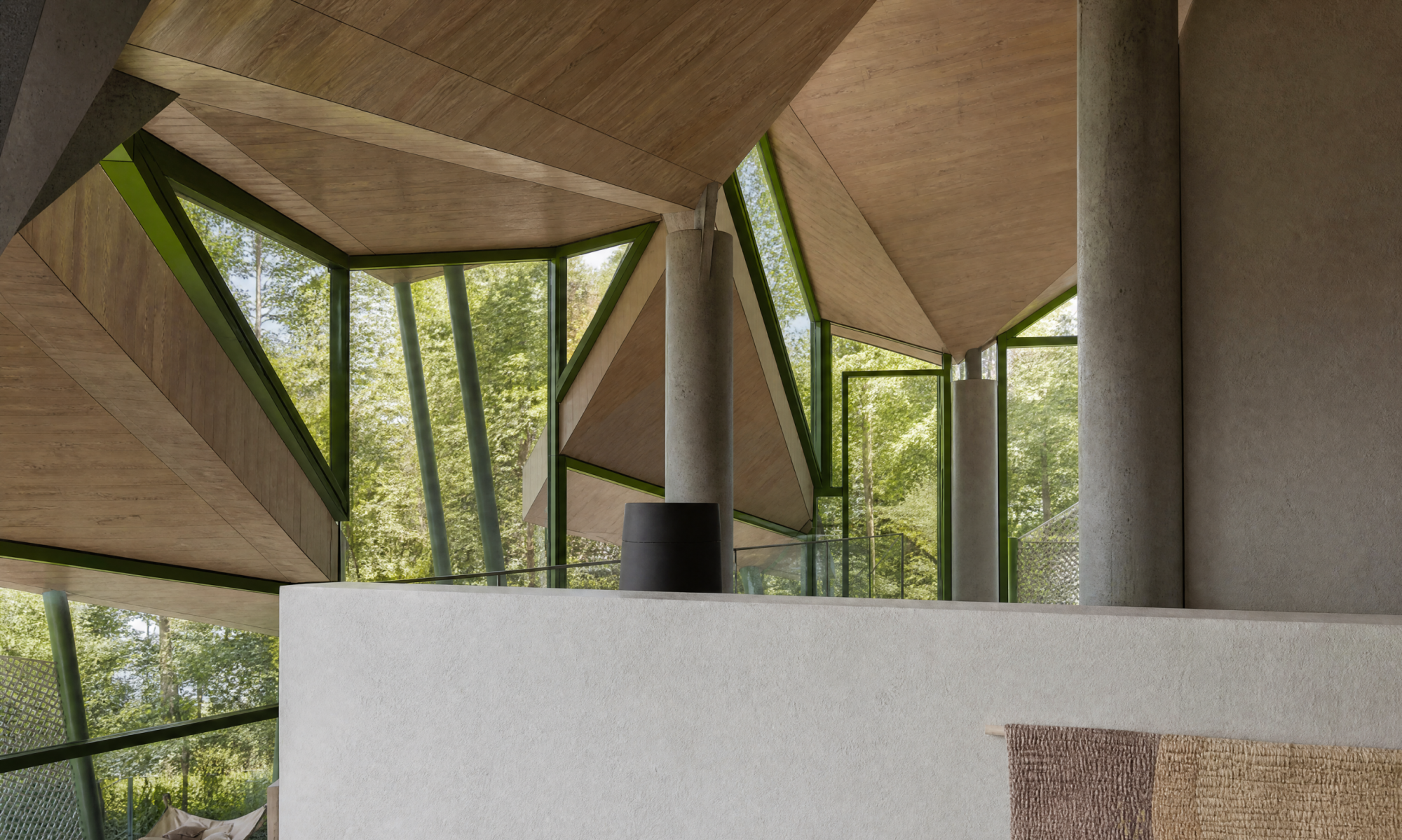
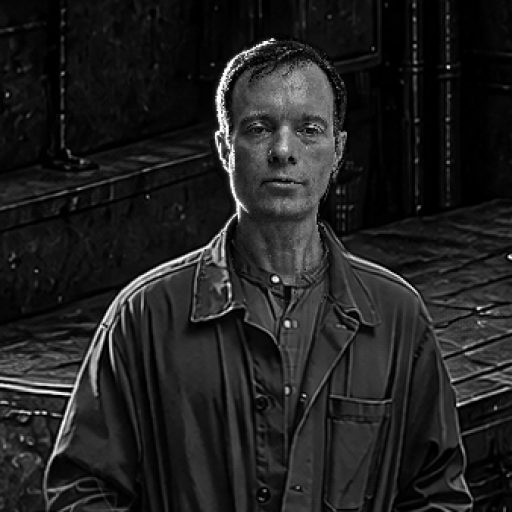
Jan Rom’s academic study (dated 1999) under the supervision of architectural theorist Jaques Aron and philosopher Jean-Louis Génard at La Cambre, Brussels, looks at how the artistical/architectural metapher of The Crystal that was used by artists and architects throughout the 20th century.
right-click on the link, then “save link as…” to download the heavy 172 pages PDF-file (scanned pages).
Abstract: Think of the crystal not just as a pretty rock, but as a symbol for something pure, perfect, and unified.
Here is how that idea changed over time:
1. The Crystal as a Dream of a Perfect Society (Early 1900s)
In the early 20th century, architects like Bruno Taut believed buildings could actually change how people behaved.
• The Glass House: Taut designed a famous building called the “Glass House” in 1914. It wasn’t a house for living in; it was like a temple made of colored glass.
• The Goal: He believed that glass architecture would kill hatred. If everything is transparent and full of light, people have no secrets and treat each other better.
• Reality Check: When Taut had to build real apartment blocks for regular people later on, he couldn’t use magic glass temples. He had to build practical homes. The “sacred center” of the community disappeared, and the architecture became more about function than fantasy.
2. Buildings That Grow Like Plants (Mid-1900s)
Later, architects like Hans Scharoun and Hugo Häring used the crystal idea differently. They didn’t want to force a shape onto a building; they wanted the building to grow naturally from the inside out, like a crystal or a plant.
• The Berlin Philharmonie: This is the best example. Before this concert hall, theaters were usually a stage with the audience facing it in rows. Scharoun put the orchestra in the middle, with the audience sitting on terraces all around them, like people sitting on a hillside in a vineyard.
• Why? He believed the music was the most important thing, so the building’s shape should grow out of that central purpose. It was a more democratic way of building.
3. Art That Creates, Not Just Copies (Paul Klee)
Painters like Paul Klee also loved the crystal metaphor. A turning point: The crystal is not a metaphor for a democraic society, but now turns inward, into the soul on the arist. For Klee, the “Crystal” was a symbol of the artist’s clear mind.
• He didn’t want to just paint a picture of a tree. He wanted to paint the way nature creates a tree. He saw art as a process of creation, not just a copy of what we see.
• Another artist, Lyonel Feininger, painted old churches but made them look like they were made of shattered, transparent glass light. He was trying to mix the old spiritual world with the new modern world.
4. The Dream Shatters (Postmodernism)
By the end of the century, the study says the “Crystal” broke. Based on an ancient idea first pronounced in Platons ‘Parmenides”, where he All-One becomes the all of Ones.
• In the old days, people believed in one big, unifying truth (symbolized by the clear, perfect crystal).
• In the modern world (Postmodernism), we realized the world is too complicated for one single truth.
• Architects like Peter Eisenman, Ben Van Berkel, Daniel Libeskind,… started designing buildings that looked folded or fragmented, showing that there is no longer a single “center” holding us all together. The crystal became a “shipwreck”—broken pieces floating in a chaotic world.